Showing posts with label book review. Show all posts

Monday, March 4, 2019

Getting Through the Dark Days of Caregiving--Book Now Out


I always liked this picture. I chose this picture for the cover of the book. It was taken in 2012 about two years before my late husband, Herb, died. We took classes in the afternoon at our Lakeland Church, and Herb chose a comfortable chair to sit through this counseling class and I love his smile. 

The publisher blocked out all the rest of the picture, not showing the "faith" on the bookshelf or my purse on the floor! I love the book cover with its dark grey. You are a caregiver, a hard situation, for your loved one and at times they shine through. That cover says it all for me. 

You might recall that this project started out as a seminary counseling dissertation for an EdD degree, with the seminary in Florida, and my having moved to Alabama. I went back to Florida twice for that dissertation, but then decided that I really didn't need a counseling degree in my 70s--nor a dissertation. So the project morphed into a book. I want friends and churches to help with the caregiving and the book helps them help. 

The book is from a Christian perspective, but I didn't feel I had time to hunt up a Christian publisher. Yes, I had written for Gospel Light Publications, D. C. Cook, and a Dallas publisher, but that was YEARS AGO and that was all about Sunday School curriculum. After all I am getting up there in age! I wanted people to know with the LORD's help you can be a caregiver for your loved one. I chose a self-publisher, Xlibris. I didn't have time to find that publisher.  

I invested money for Xlibris to do this. Then they wanted more money for marketing, but I have VERY limited funds because of my caregiving and didn't go for it. Suddenly what I thought was finished, isn't! I now have to promote the book! 

Footnotes were a big problem. I learned what needs permission and what doesn't need permission. I learned that Chicken Soup for the Soul needed money to quote them and, sure enough, when the book came out, they cashed my check. Someone else has a check also. Have to research who that is. All of the permissions were sent to Xlibris via email, with the exception of less than 10% of book quotes and public domain quotes which didn't need permissions. I quoted myself from this blog. 

With my going through eye surgery now, there are a few printing mistakes that I didn't catch and the publisher didn't catch, but basically I was my own editor as a former English teacher in public schools. Xlibris made the pages and put the pictures near where I suggested. I had to sign off on different parts of this publication process including the ebook now advertised for $3.99 on Amazon. Two lovely reviews are now on Amazon and those reviewers got their ebook from Amazon. 

You can order Getting Through the Dark Days of Caregiving from Xlibris, Amazon or Barnes & Noble. Have NO idea how I will get paid for this book, folks! I can buy them myself from Xlibris and then charge the regular price for them. I mailed priority rate books to four people for about $8 per book!

My free book copies came last Tuesday night when I got home from Toastmasters--two hard back copies and eleven paperback copies. I am keeping one hard back copy and gave the other one to Huntsville Health and Rehab that has one picture and input in the book. You may recall that I lived there for three weeks, and visit there regularly, including seeing my friend Virginia who turned 100 February 21, 2019. 

I had two experts read and endorse the book: Dr. Eyrich and Rev. Mahn. I personally brought Dr. Eyrich's book to him last Thursday in Birmingham. That day I also gave one copy to the Alabama Alzheimer's Association located in Birmingham. Rev. Mahn will get his book Tuesday night at a Huntsville grief group dinner that I am going to. Mahn helped me with my own grief and that tenth chapter on grief. There are others who helped edit the book and their names are in the acknowledgments.

Friday I substituted at a middle school where I have many fans because they like my raps. I showed off the hard copy and they clapped. I wanted them to know that I am not just a silly substitute who raps and has a YouTube, but wrote a serious book. 

Caregiving is serious 
and so is my book! 
Y'all buy it! 

Saturday, February 28, 2015

Reflections on Peter Walsh's New Book

I am in the process of selling my house and also I am dieting with Weight Watchers. Peter Walsh points out that dieting and decluttering all go together in his book released this past week. Amazon got it to me on the release date, February 24th, and I have been enthusiastically reading it during planning periods while I substitute teach.


Peter also adds a third element to decluttering and eating and exercising--mindfulness. And so he launches a plan to work on all three. In this very thoughtful and might I add organized book, he takes twenty-two volunteers on a six-week program. 
From 9/14/12


My Decluttering
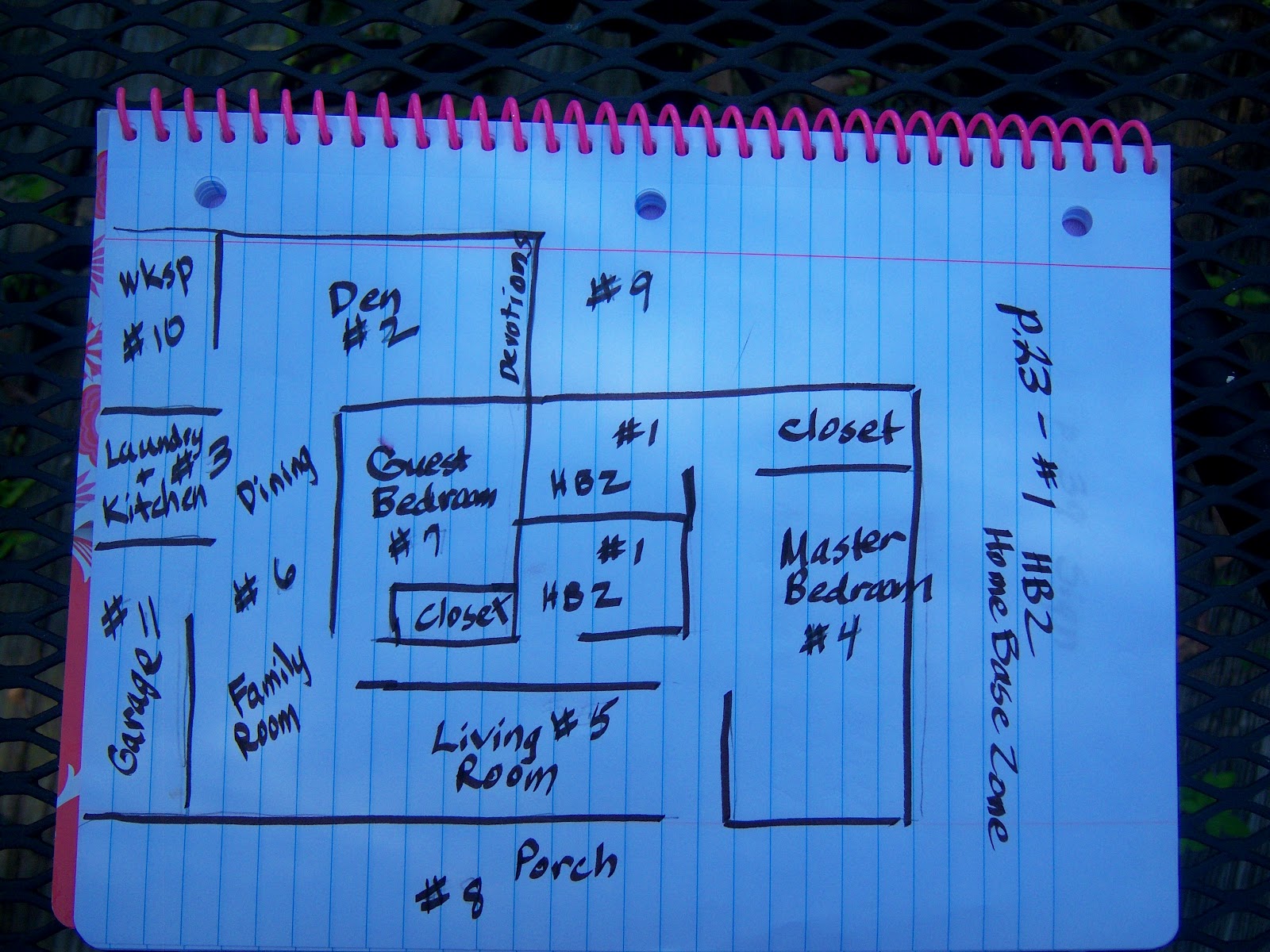
But decluttering has taken/is taking me much longer than six weeks.  Walsh uses a room-by-room approach to decluttering as I did when I went through Mindy Starns Clark's book, The House That Cleans Itself.  15 people got Mindy's book that she mailed me beginning HERE IN 2012.* Those of you who have been following my blog saw me prioritize areas to work on, Alzheimer's proofing the house as I went. Along the way I did get help from Pharis for the outside of the property #9. The last two areas, I never got to--the garage #11 and the workshop #10 as my caregiving days became more difficult and even house maintenance took a back seat to caregiving, a sad fact that I have had to remedy in recent days.  My Huntsville brother and Pharis were the ones to clean out Areas #10 and #11 and give me new purposes for those rooms--the garage has hosted three garage sales in 2015 and the emptied workshop is now the staging area for my move to Huntsville, Alabama (Rocket City) as the above banner suggests. The whole project has become a downsizing with rooms changing and furniture leaving the house as I have been chronicling recently.


My Dieting and Exercising
I started back to Weight Watchers at the end of 2011 as reported HERE. In 2012 I lost 25 pounds and I kept off 15 of it as the caregiving proceeded. Who knows! I might have gained all 25 pounds back! As I reported in that first Weight Watcher post, I chose 7 am Saturday as my meeting time. Spring of 2012 also saw a respite cruise paid for by family and on that cruise I maintained my weight. During the last years of caregiving, I chose caregiving above dieting, realizing that I was called to be there for my husband above all while also having to work to make ends meet. My husband did not want me walking outside and so I did get a treadmill that is going with me when I move and that treadmill might have helped my stress level. I might add that Peter says you don't need a treadmill, but because Huntsville is a colder climate, I might not be able to walk outside in the Winter. 

After my husband died, I went back to that 7 am Saturday morning meeting. Weight Watchers has been for me a great social and inspirational time. Why I even checked out Weight Watchers in Huntsville, Alabama last December.  This morning my total weight loss since 2011 is 31.2 pounds. Here I am today with my Lakeland, Florida leader. I looked all over this computer and my Notebook computer and could not find my "before" picture, but people are starting to notice the change. My weight loss is helping me decide  what clothes to keep as I downsize. 

In Walsh's book, he does not plug Weight Watchers, but I certainly want to and studies have showed that Weight Watchers is the best diet program around. 

Mindfulness
This area of the soul, the self, for me incorporates my Christian belief and I have been meditating on Scripture regularly. In fact, with a clue from Georgene who has often commented on this blog, I started typing up numerous Scripture passages to meditate on and apply. 

In my caregiving and in my widowhood, Scripture is precious to me--it sustains my days and nights. I also was helped by Staci Eastin's book The Organized Heart, a book that helps us Christian believers be mindful. See HERE and also HERE where I reviewed it. 

So you can see I totally resonated with Lose the CLUTTER, Lose the WEIGHT--with all three of the author's main points, plus learned so much more. 

New Insights from Peter Walsh
Before Alzheimer's came into the picture seven years ago (by my estimation), my husband worked, I would watch Peter Walsh on the Home and Garden Network's "Clean Sweep" in the summers before retirement when I taught in public school. (Those were the days I watched TV before my husband sort of took over the big TV.)  Peter would produce episodes like this one he has pictured on his LIKE* page in his native Australia. 

Already a fan from back then, I enjoyed these gems from his book this week:

  • Somehow, at some point, you became too large for your comfort.
  • Given the environment we live in . . .  How can your body and home not get to this point?
  • If the stuff you own is not helping you create the life you want, then let it go. My main job in Huntsville is to write that counseling dissertation on dementia caregiving. I do not need stuff. 
  • Pitfall #1: Not seeing enough improvement. Oh yes. I can come home and be upset. Yet I look around and it looks so much different than it does before I decided to sell and move. 
  • Pitfall #2: Lack of time. Walsh suggests you schedule tasks like you would any other appointment. I know that perfection is gone, but today I will pack-up my books which are not selling and donate them.
  • Pitfall #3: Resistance from family. Had my husband still been living, I would have had to leave things the way he was used to. But since his death, my Huntsville brother spent time here in January to help me get repair projects underway and to clean out areas #10 and #11 of my home as I mentioned above.
  • Pitfall #4: Isolation. Weight Watchers is such a great group of friends. They cheer you on and understand when you blow it. I do not feel alone. Also, I have learned to ask for help. 
  • Task 1: DEVELOP A VISION FOR WHAT YOU WANT FROM YOUR KITCHEN. 
  • Task 2: SEPARATE THE "BENIGN" FROM THE "MALIGNANT" ITEMS. Malignant items are defined as any items that make you feel guilty, sad, nostalgic or angry. 
  • Task 3: CLEAN OUT YOUR FRIDGE AND FREEZER. 
  • Task 4: CLEAN OUT YOUR PANTRY. 
  • Task 5: CLEAR OFF ALL HORIZONTAL SURFACES.    
There are 11 tasks in all,  and this chapter ends with physical activities. The book continues with the bedroom, bedroom closet and the bathroom. 

Then Peter Walsh goes into meddling with my desk and finances. He suggests zones. Zone 1 should be the area by your desk. That has me thinking about getting rid of my four-drawer file cabinet and just keeping selected filing arrangements. Zone 2 represents material that one uses infrequently. I am going to label Zone 2 boxes for my move, put them in the workshop move staging area, and keep Zone 1 material available. The author tells you to back up your computer files. I have already been trying to change my email because I am moving from the Tampa area and cannot have a Tampa Road Runner email. I do like what he says about maintaining your changes and will perhaps discuss this in another blog post or when I move to Rocket City (Huntsville, Alabama). 

So this week I am all into Peter Walsh insights. Shoo away your extra shoes, he says. Yesterday I brought a dozen or more pair of shoes to put here by the music room in the school where I substituted. 

_______________________________________


Today we have rain today in Plant City, so I canceled my 7th garage/yard sale and am just working on my downsizing and putting the house on the market today. Besides, the 80th Annual Plant City Strawberry Festival is on and that is the focus in our area now. 


My deadline for having the house go on the market is March 9th and I have to get back to making my rooms look spacious, downsizing and packing. Might try to get to the festival sometime next week with friends from last fall's cruise I invited. Probably will put books into the car to donate when it stops raining, because books have not sold well in my garage sales. 


Carol
* One of my blogger friends (also a caregiver whom I interviewed) suggested I form a "The House That Cleans Itself" group on Facebook; that group is not as active as is the Plant City and Friends FB "LIKE" page that I regularly post on and which has 74 members. I am also following Peter Walsh's FB "LIKE" page now and we have messaged each other. His next book, I believe, is on downsizing for seniors or for your parents who are seniors needing to go to a nursing home.

Tuesday, August 19, 2014

Book Review: The Sun Still Rises by Shawn Doyle

I had seen Shawn at a gathering in December of 2012 and he gave me a piece of jewelry that had been his wife's--very special simple act. His wife Cindy had passed away unexpectedly seven months earlier.  His book, The Sun Still Rises: Surviving and Thriving After Grief and Loss, is a splendid guide for the necessary journey for my widowhood.

Shawn Doyle is an author and motivational speaker who thoughtfully sent me his book when it came out last week.  Spread the word, he said, and I am glad to do that because it has so much food for thought and insight and is so timely for me.

Doyle covers the myths about bereavement that society puts on us and critiques those expectations. I thought about one of those when publicly I was seen rapping in a street fair that I wrote about recently on this blog. I wondered what would people think. Yet I knew in my heart that my husband would want me to go on and bring smiles to people when I rap. As dementia ravaged my husband's brain he tried to act normal and he would want me to go on when he was gone.

Other myths Doyle dispels include that there is a time frame for grief and that all family members will be helpful. He points out that the death after a sudden illness is not the same as a prolonged illness. Certainly this is the case with my two late husbands. I experienced shock the first time after the heart attack and acceptance the second time because I saw my husband go downhill and know now that his soul is with our LORD waiting for the bodily resurrection when Christ returns.

One morning, June 23, 2014, to be exact, the sun rose when the every four hours alarm rang at 6:30 am. I awoke in my twin bed by my husband's hospital bed and I soon discovered that husband was dead as I recounted in PRECIOUS LAST DAYS on this blog, a post that has had over 300 views. I am angry at dementia, but not at the LORD's timing in taking my husband to be with Him when He did. I finally became comfortable with caregiving as I have written on this blog, but I now need to begin a whole new chapter--grieving. I am not so comfortable being single and grieving as of yet.  Shawn's insights are helping me.

But it is not just GRIEVING, where I could get stuck, but I could get stuck NOT forging of a new life. "You will eventually be OK" writes Doyle assuredly (p. 48) and you CAN reinvent your life. Hmm, my life now includes getting back to my counseling dissertation on caregiving and continuing to write this blog. Will my grieving continue because of writing this dissertation and writing this blog? I ask myself as I read this carefully crafted book.

Here are some gems from the book.
  • Shawn advises to not have toxic people in your life. 
  • I choose how I think and I choose my attitude (p. 59) he writes. 
  • Life is so short and precious that I'm not going to waste my life sitting around being miserable, mean, and sad. . . I choose to heal, honor the past, but embrace the present (pp.60-61). 
  • Grief is not only emotionally draining, but also takes physical tolls on the body. We have to take care of ourselves. Shawn went to Weight Watchers and I now have the time to go back to Weight Watchers and have been there for several weeks slowly losing almost five pounds.
  • Get involved with others and give back to others. 
  • Decisions are more difficult when you are grieving. Listen to your heart, but also have advisers.
  • The feelings of grief can include numbness, anger, distraction, nightmares, impulsiveness, special day blues, jealousy, lack of direction, lack of optimism, depression, personality changes. My first special day, July 4th, saw two people backing out on being with me and it was hard. I haven't had nightmares or jealousy. I admit to a bit of impulsive spending, numbness, anger and distraction. 
In chapter seven Doyle lists 12 rules of others and how to break those rules. He writes:
My advice to you on this rule is simply be yourself and don't worry about how you are supposed to or not supposed to act. If people want to misinterpret your actions as being inappropriate then that is their problem. (p. 118)
Shawn concludes: Every day the sun still rises. You can either turn and face it, or hide in the dark. The sun is better for you, trust me. (p. 170)

I want to add to this review that the SON rose from the dead so that I may have new life on this earth because I believe in Him and eternal life in Heaven. Christ said in the beatitudes God blesses those who mourn,  for they will be comforted (Matthew 5:4 NLT). While Shawn is well read with many helpful quotes and excellent advice, his book is mainly for his secular readers as he is a popular motivational speaker. However he does touch on spirituality briefly.

But if you are in grief, don't miss this book.  It is a HUGE help 
with freeing suggestions 
and well-crafted, clear insight. 
Thanks, Shawn, for this gift. 

Thursday, June 12, 2014

Book Review: The Graduation of Jake Moon

Barbara Parks writes fiction for youth, and one of her novels helped my friend's granddaughter deal with her grandfather's Alzheimer's. Sally's granddaughter wrote:

Jake's grandfather used to be the man of the household. When the third day of the third grade comes, Jake gets unfortunate news about his grandfather being diagnosed with Alzheimer's Disease. 
Jake has called his grandfather Skelly since he was a little boy and he quickly realizes that things aren't going to be the same. Things just got worse and worse for them. Sometimes Skelly wasn't even aware of his surroundings and becomes more and more depressed. Jake started to disengage from his own social life. Jake describes Alzheimer's in three different stages: 1) sad; 2) sadder; and 3) the saddest thing you would ever see.  
Jake and his family had many ups and downs (mostly downs) when they found out about Skelly's disease. Then, however, they become more caring and loving than ever before. 

 My friend Sally wrote:

The book was especially appropriate for middle school aged children. The book didn't explain the medical details of A.D. (the book is fiction), but my granddaughter, aged 12, often would identify with Jake's feelings of embarrassment of Grandpa. She would say this sounds like something grandpa would do.

I would highly recommend this book. It kept my granddaughter's interest, was a fast read and written for the age group of 11-14. Often I had given my granddaughter books and articles about A. D. so she could understand the disease and its effect on her grandpa who is in the middle stage. What I had given her didn't keep her interest like this book. 

Google it or ask your public librarian to get it for a summer read or listen.  Special thanks to the Media Specialist at a Plant City middle school who pointed out this book, and of course to "Sally" and her granddaughter who share this journey of caregiving for grandfather "Jake"* with us.

*"Sally and Jake" are not my friends' real names. The grandson in the book is also named "Jake".

Tuesday, May 14, 2013

Book Review: Caresharing

Marty Richards dedicates this book to her Aunt Toni, who died at 102 1/2 as I [Richards] was writing this book. She indeed has been, and continues to be, my teacher and "the wind beneath my wings." This book came highly recommended to me by a social media friend who is in the field of caring for seniors.

Richards encourages us to share the caregiving journey with others and considers it a spiritual journey where whatever your faith you ponder questions about life's meaning and purpose (p. xiii).

As in another book I reviewed on this blog she uses the term "carer", but she adds "care receiver" and "care partner" to the mix. She says this journey is a dance where there are three moves:
  1. Offer help
  2. Ask for help
  3. Receive help
She explores many emotions and growth areas that I ponder in my Christian faith: sadness, anger, guilt, fear,  failure of others, failure of self, forgiveness (a whole chapter on this one), coping, grief, and hope. She explores family expectations and roles and writes: all generations are affected when someone in the family needs care (p. 69).  She is reaching across different faiths, and so does not use Scripture as I would have done (and will do on my seminary counseling dissertation). It's as if all the issues I have addressed on this blog or may need to address are in her book.

Richards helps me want to know my husband more and not just the disease that has him. I woke up this morning and interacted with him before we even got out of bed; finally he said to turn over--he wanted a few more winks of sleep! I want all the interaction I can have with him at this stage and it is important. I am not working outside the home today and I am a lovegiver today, not just a home economist. I want to validate his feelings and learn his stories. Relating to him is just as important as all my other "to dos", some of which others can do for us. And, recently I have seen what others can do with our neighbor Kenny and Wayne who stepped up to the plate to mow our large lawns; also I now enjoy texting support from others in my church--they pray for us and I pray for them. They are caresharing.

Build on what your care partner can still do, advises Richards. Affirm their value. Ask yourself what is going on with difficult behaviors. Connect soul to soul. Even though I feel so busy much of the time, I read Scripture with my husband most mornings now, as a result of this book. I have had a habit in recent years of going through the whole Bible every year, but didn't think hubby would be able to comprehend this discipline. Instead we read from the Psalms and Proverbs and he often prays. Kenny prayed yesterday before I left to substitute teach.

On page 207 she has a hope inventory for areas of your life--the world around us, our work life, our home life, our relationships, our physical health and our sense of self-expression. She asks us to check off if we feel hopeful or hopeless in each category. WHERE DO WE NEED A NEW PERSPECTIVE on HOPE? Write an ethical will in the Orthodox Jewish tradition is one suggestion. Write a spiritual autobiography (I did that with Getting Off the Niceness Treadmill). She offers other strategies for our senior years as well.

You can get Caresharing: A Reciprocal Approach to Caregiving and Care Receiving in the Complexities of Aging, Illness or Disability, new or used, on Amazon HERE. It is well worth reading and very economic when purchased used. My used book was withdrawn from the New York Public Library and I wonder why this hardly used book was withdrawn, but am grateful for this book and its insights. I will read this book again in my journey with my husband's dementia, and practice the dance she encourages.

My Amazon review was just published HERE.

Thursday, March 7, 2013

Epic Mom Book Review

Epic Mom:
Failing Every Day a Little Bit More Than You


Marianne Walsh always puts a smile on my face whether it is on her blog or in her new book, Epic Mom, coauthored with Julie R. Harrison. Why would I review this book here? First of all, Marianne comments on this blog--she is a blogging social media friend. For some time she has been reading this blog and I finally caught on and started to follow hers. (See link at the right for her blog.)

The editor of the Chicago Parent Magazine where Marianne has a column, Tamara L. O’Shaughnessy, writes:
The ability to find humor while riding shot-gun with lunacy is what sustains many parents, and Marianne details the comic glory of it all in Epic Mom. . . . Perfection is not attainable. We all know that on some level. But who has the guts to actually admit their faults and failures to the world? Marianne Walsh and Julie Harrison, that’s who. (p. 2)

Co-author Julie writes as MOV in the book. I was thinking about reviewing this book on Amazon as I have for other books, and I noticed that both MOV and Marianne have reviewed their own book on Amazon!  Hmm!  Their reviews are just part of the edgy, tacky fun in the book. You will not at all be bored with the book even if you are not a mom.  I have been reading this book when I have free moments while substitute teaching and it has prompted me to write funny notes to the regular teacher about his/her students.

Let me tell you a bit about Marianne’s part of the book and an example of how I identified. Both of us want our husband to be romantic. Marianne's husband says that "being married is like having a boss." (p. 38) I wanted a romantic statement when I interviewed my husband earlier on this blog and he said what he likes about me is that I feed him. Neither one of us get roses, etc., although Marianne was delighted to get a new computer chair. Only once when I was first engaged to my husband I got roses delivered to my school in Miami. Then a Valentine's Day after we had moved into our home, hubby got me an automatic garage door opener. I taught in public school then in this area and was interviewed by the high school news about my romantic gift. The youth who interviewed me didn't think a garage door opener was very romantic, but actually it has been wonderful to just drive into the garage and unload groceries so I can "feed" my husband. I think we have a theme going here in my marriage that extends even into our Alzheimer's period. I like finding things to chuckle about and Marianne is a master at that. Life can be too serious.

There are other similarities, but the hilarities of this book are what I want to feature here. Do not miss, and I repeat, do not miss her footnotes in the book. You will crack up. Marianne's wit and imagination far surpass Roseanne Barr or any other comedienne that I can think of (and I cannot think of many, you understand).

I love Marianne's adventures de-cluttering her closet, her angst about her carpet and making a "library" for herself. The carpenter calls it a "mud room" and she has to correct him that it is her "library'. Her three sons in 40 months had to stop and either she or her hubby got fixed, not sure who, but these sons were intruding on her bathroom time and she was totally a hoot writing about it. Near the end of the book she writes about her previous single life in the corporate world in the chapter "Back When I Was a Real Person Who Peed Alone".

Elementary school teachers need to read her book as she humorously writes about communications from the three schools her three sons attend and science projects. On Valentine's Day she couldn't send candy with her sons to public schools (she is fond of Reese's Pieces I think) and she bought pencils instead at Target. While at Target, another mother from her neighborhood said to her, "Well, I hope the kids enjoy their writing utensils. It's simply another reason I prefer the Catholic School System. Candy is not our enemy, Satan is." (p. 315) Then Marianne writes:
The exchange stayed with me all day. The continuous eviction of anything remotely fun from the public school system has left me dispirited. Even non-religious holidays are often re-named to avoid offending anyone. . . . Fed-up, I brought up the Catholic school option to my husand that evening. For a person known for her frugality, my desire to spend money on schooling instantly aroused my husband's suspicions. He started questioning my motives. . . .
Finally about 20 minutes of debate, he suddenly remembered my penchant for pilfering our darling children's Reese's Pieces. "Marianne, this is about the candy, isn't it?" (p. 315)
Love this book, Epic Mom.


If we can all find humor in life, we don't have to feel sorry for ourselves and take ourselves too seriously. I totally get imperfection. I wrote about my imperfection in Getting Off the Niceness Treadmill, and show you my horrible housekeeping when I post about The House That Cleans Itself on this blog. So many Christians I think have to show their perfect sides all the time. But grace doesn't have to do that.

Marianne talks about sibling rivalry with her sister in her book and perhaps I have some also with my brothers. "Don’t you have any shame?" my rocket scientist brother remarked recently about my YouTube talk on The House That Cleans Itself. My satellite scientist brother just said the talk was too long. (I find if difficult to stop talking when I am supposed to at Toastmasters.) I guess if you are a scientist you have to be perfect and I do think my younger, taller brothers are perfect, mind you. I just know I am not and am so glad that Jesus Christ died for my imperfections. Here is what one Christian comic said about sin.
From Facebook Posting

Saturday, February 9, 2013

New Updated Edition of The House That Cleans Itself

The updated version The House That Cleans Itself by Mindy Starns Clark came Wednesday. That first version has sold over 100,000 copies. Wednesday I sat down on the deck to read the updated version, enjoying nutritious Plant City strawberries, a small avocado and a few almonds. Double treat of food and book The additional subtitle of the updated edition  is "8 Steps to Keep Your Home Twice as Neat in Half the Time". You can order that book from Amazon at the lower right of this blog.

The first thing I was curious about was the donut tray. Did she have it in the second book? Yes she does.


p.  184 in first edition vs. p. 52 in new version

My  Leaning Two-Step Sorting System
I thought about the difference in the 2007 and 2013 editions. In six years the author has been living this book and writing novels. That jelly rack or donut rack holds her research. It's probably more sturdy than my Office Depot file that helps me with the two-step sorting. My drawers pictured include Pending, Correspondence, Receipts, Health, Toastmasters and Taxes. It is so wonderful to now have all my tax information together. These are not projects, but broad category sorting that the author recommends. The white top box includes my daily mail that I sort through once a week and were it not for the paper clutter in Area #7 I am fairly paper clutter free now. However, I do not want a donut rack in my home. It is not pretty. But I do have projects to finish and Area #7 (the guest bedroom disaster area I blogged about earlier this week) can help house projects. What Mrs. Clark's donut or jelly stand translates for me is horizontal places for projects. I do have horizontal spaces in Area #7 on a wall rack that can house sewing and other crafts including photo albums. She suggests:

Create a project area in a different room where anything left unfinished after one sitting will be left alone until I can get back to it. (p. 52)
The updated book does seem to ease up on some suggestions in favor of concepts. Her COVERT
system takes a backseat (chapter 20) to her emphasis on 8 steps in chapters 4-11.  The 8 steps are:
  1. Become a detective. She asks you to try to be detached, analyze the evidence of the problem, figure out the reason, and figure out the root cause. I saw evidence that I had tried a system, that it had gotten out of hand and I couldn't maintain it with all going on in my life, including adjusting to my husband's Alzheimer's.
  2. Change the house to fit the behavior. This point was emphasized in the first edition that I wrote about earlier on this blog. (See labels for The House That Cleans Itself on this blog to read about what I have done beginning last fall.)
  3. Stained rug
  4. Create a first impression of clean. She covers sight zones, but also adds the concept of "inevitable invisibles"which she defines as
    those things that contribute to an overall feeling of disorder or disrepair--staines, tears, rust, grayed edges and nicks--but that you rarely notice because you've been living with them so long that they have become invisible to you. (p. 62)
    An example of one is our rugs which were professionally cleaned, but moisture deep down eventually came to the surface so the surface of the rug was no longer clean. We have our own expensive carpet cleaner in for repair. I will get a lesson in how to operate it when I pick it up, since my husband no longer cleans our carpets as he once did.
  5. Think like a hotel. The author covers stations, up and away, and barnacling (the tendency to pile stuff on horizontal surfaces) so you can't easily dust.
  6. Aim for simplicity. She again asks these three questions about stuff::
    1) Is this item worth my time?
    2) Does what I get from this item provide a fair trade-off considering the time I'll have to spend cleaning and storing it?
    3) Do I want to spend another second in the future fooling with it, or do I want to get rid of it now so it will no longer cost me a single moment of time? (p. 99 in the 2007 edition and p. 81 in the 2013 edition)
  7. BEFORE picture shows my good potential,
    but just collection of projects to go through
     and not any active projects.
  8. Explore the "why". You have to discover why you are housekeeping impaired. Mrs. Clark discusses several senarios, or whys. I am thinking through the evidence in the above photo that point to poor housekeeping.  
  9. Make it a team effort. I must admit that I have a hard time with this one because hubby does very little now and I do not have troops to rally. Perhaps I will step up and ask for volunteers especially in the yard, garage and workshop.
  10. Put God at the center. She quotes Proverbs 16: 3 which says,
    Commit to the LORD whatever you do, and he will establish your plans.

Certainly the LORD has been helping my efforts as I go through this house, and the discipline of prayer and Bible study is so important to me. I want God to be at the center of my efforts each and every day. I know He is guiding my caregiving of my husband and I know people are praying for us.

My husband's memory is slowly leaving his mind and I realize that I need to make photo albums soon before I finish Area #7, the guest bedroom. Lots of photos are in that room and I set up the same table that was in Area #4 as a project place now. Usually I would do a project in the den or on the dining room table, but now I have a project place picking up on Mrs. Clark's suggestions. I am now trying to get a photo album of some sort done for my husband by Valentines Day. It is the green drop down one at the right pictured below--much easier than a Creative Memories album, and it will fit nicely on his new DVD coffee table.

Station for creating photo albums

Love having this place to work that is not in the sight zone. When we have overnight company, it will be changed.

The updated book emphasies label makers. I have an Electronic Dymo Labelmaker and am ordering Dymo tape for it so I will be able to mark containers in the home.

This 2013 edition  of the book also has a glossary of terms and a chapter on yard sales. It was so much fun to read this book and gain new concepts about my housekeeping and de-cluttering efforts.

Carol

Friday, December 7, 2012

Book Review: The Peacemaker

It has been said that Alzheimer's brings out the best and the worst in people. Often I read on Alzheimer's blogs about conflict between family members about care for elderly parents. People in many caregiving situations read this blog and so this issue may come up in families who are seeing both the best and the worst in one another.

I am in my final classes for a seminary counseling degree and one of the required reading books, The Peacemaker: A Biblical Guide to Resolving Personal Conflict by Ken Sande, had a very insightful story. Now this scenario in the book I am quoting in no way parallels my situation, but is illustrative of both the best and worst in people and how Scripture and wise counsel can help the Christians who face such caregiving decisions. Ken Sande writes:


When a person earnestly pursues the conciliation responses to conflict, there is a greater likelihood that he or she will eventually see reconciliation. . . . The different responses to conflict and their association dynamics were dramatically revealed in the first family conflict I conciliated. I was asked to help seven adult brothers and sisters settle a guardianship dispute over whether they should keep their elderly mother in her home or place her in a retirement center. Five of the siblings were doing all they could to escape from the situation, either  by pretending that a conflict did not exist or by refusing to meet with the others to talk about it. The other two attacked each other intensely and frequently, slandering one another to family and friends and fighting in court to obtain control through legal guardianship.
The first step in resolving the dispute was to help the parties change the way they had been responding to the situation. The five siblings who had been trying to escape from the problem quickly saw the benefits of mediation and agreed to meet together. The other two sisters grudgingly consented to mediation, but they continued to attack each other during our meetings, accusing each other of improper motives and demanding opposing solutions. Our investment of time and energy was producing no results, and relationships were suffering further damage.
I finally asked to talk with the two sisters in private to help them discuss the personal offenses that were obviously fueling their quarrel. Putting the guardianship issue aside for a moment, I helped them to examine their attitudes and behavior toward each other. As we studied a few relevant Bible passages, the Lord began to work in their hearts. After about thirty minutes, the real cause of the conflict finally came to the surface.  Almost twenty years earlier, one of the women had said something that deeply hurt the other one. The offended sister had tried to pretend that she was not hurt, but she could not help brooding over the insult and their relationship was steadily poisoned. Consequently, they opposed each other in everything, even if it involved their mother’s care. 
As we continued to talk about their relationship, they began to deal honestly with their feelings and actions. They saw how they had been dishonoring God and hurting other people. As God opened their hearts, they confessed their sins and forgave each other. With tears in their eyes, they embraced each other for the first time in twenty years. They soon joined their brothers and sister and explained what had happened. Within five minutes, all seven children agreed that their mother would be happier in her own home, and in another fifteen minutes they negotiated a schedule for her care.  As you can imagine, when they told her the news that evening, the reconciliation of her children brought her even more joy than the  decision about her living arrangement (pp. 23, 24).
Now mediation with someone else might be needed with placement of an Alzheimer's loved one. We can grow in grace and in the knowledge of our faith in the process. The LORD doesn't waste any of our trials, and unless we choose to become bitter and discouraged, He will be there and turn our sorrows into joy and perhaps through mediation and of course through meditation on His Word.

I have loved the process of taking my seminary counseling classes since 2006 and can see the light at the end of the tunnel. One project was my book, Getting Off the Niceness Treadmill. Other papers have been on a topic related to Alzheimer's. I will be starting the dissertation some time in 2013, LORD willing. It has been suggested that I write my dissertation on being an Alzheimer's caregiver. 150 pages! Oh no! More stress on top of being a caregiver and on top of reorganizing the home for caregiving! However, with reading such wonderful resources as The Peacemaker there will be much to share in that dissertation.

Get the book, folks. Such help for all kinds of thorny issues.

Saturday, November 3, 2012

Brill's "Alzheimer's Disease" for young people


The Marshall Cavendish Corporation has produced a series of books I discovered in substituting in a Plant City middle school. While the media specialist talked with the eighth graders about primary sources, I discovered a secondary source library book. The books in the 616 section of the library by this publisher included: Asthma, Depression, Heart Disease, Juvenile Diabetes, Lung Cancer and Alzheimer ’s Disease.

While the two children’s books I reviewed earlier here (The Memory Box and What's Happening to Grandpa) are helpful, Marlene Targ Brill’s Alzheimer’s Disease is a 2005 copyright book with much helpful information for grades six and older. We need this book to help our young people understand dementia. Mrs. Brill carefully covers the basics of the disease in 57 pages with a glossary, organizations and other references that follow.

Chapter 1 What Is It Like to Have Alzheimer’s Disease? Adam has grandmother with it and Jose’s grandfather has it. This chapter gets the young person into the topic. I do find many young people in middle school and high school are acquainted with Alzheimer's and at times I am able to talk about my husband's illness and the illness of their relatives.

Chapter 2 What is Alzheimer’s Disease? In a simple way Brill explains plaques, tangles, who might get AD, what are warming signs, how is it diagnosed, and what are the stages. This chapter has a picture of an EEG, a CAT scan and an MRI. She does not deal with two areas: 1) dementia distinctions (Alzheimer’s is the most common dementia); and 2) the latest research, although she does hint at studies in chapter four.

Chapter 3 The History of Alzheimer’s Disease. In 1907 German physician Alois Alzheimer was first to discover the disease. The section on new discoveries are not so relevant, but we do need budding young scientists to dream of cures for dementia, cancer and other diseases. Science and medicine can come alive for young people.

Chapter 4 Dealing with Alzheimer’s Disease. Cholinesterase inhibitors are described, but not Namenda. The suggestion is that aspirin might prevent AD. Old information is in the book; for example, ginkgo biloba is heralded:
Studies in the United States have shown that the extract improves thinking, memory, and behavior in people who have AD ( p. 44).
However, this is not true as Science Daily points out here. The moss extract huperzine A and fat from cow brains are also mentioned as possible help. Huperzine A has been used in China for centuries, and I found this resource here. What about fat from cow brains or hospatidylserine? The Mayo Clinic says some about this here.  However, improvements in memory lasted only a few months and were seen in people with the least severe symptoms.

The next sections, “Helping the Person with Alzheimer’s” and “Helping Caregivers” provide general reliable information, but of course more can be added—the benefits of exercise and socialization, for example.

With the exception of the outdated research in chapter four, I highly recommend this book for a young person and hope the publishers will revise it.

On another note, I am considering advertising books I have reviewed here or will review on this blog. Some reviews I already put on Amazon.  Advertisement could help provide income for a blog that I work hard at providing as I take this Alzheimer's journey with my husband and with others. What do you think, gentle reader? Feedback needed. Thanks. Advertise?

Also, thanks to you all who helped support the team I was on for today's November 3, 2012 Alzheimer's Association Walk around Lake Hollingsworth in Lakeland, Florida. Funds will still be collected on this blog for two more weeks. You can contribute with the link at the top right until November 17th.

If you have "liked" Plant City Lady and Friends on Facebook (top right), you can see pictures of my facilitator "Ann" and our friends "Sally and Jake" and my husband and myself.

Sunday, October 7, 2012

Handling Clutter: More On the Den Area Number Two

You

Have to

Make It

Look Easy

Staples has an easy button, but they don't have that vertical file from Office Depot that is helping me organize temporarily . Organizing is not easy. The commitment in The House That Cleans Itself by Mindy Starns Clark is to do that HARD WORK so you can have EASY. Having a loved one with Alzheimer's is hard enough--at least the house can be easy and simplified.

Mrs. Clark has many principles that I am applying. One is stations so you do not run around the house getting what you need and then having to put things away--or not and then it is cluttered again.

She also says to put things on the wall. My iron and ironing board are now in an unobtrusive corner of the den between a bookcase and a door leading out to the workshop.  I use the iron and ironing board in the den when I sew and sometimes for ironing clothes. EASY! I do not have to go far to put them away now. We had Sally and Jim's son over for repairs and he put them up for us. The iron is on an holder from Ikea that I had for several years, never deciding where to put it.

Their son also solved a huge problem in the den-- very small ants who seem to get worse during the rain. He got up on a ladder and found where they were coming from and sealed those places with silicone. Fortuately these small ants never invaded our kitchen and pantry closet.


The hardest work in the den and maybe the whole house is paper clutter. FlyLady talks about it here and she hits me right where it hurts. How I wanted to be able to tell you, readers, that  the den is done, but it is not because of that paper clutter.

Who do I think I am--an historian of my own life? A librarian collecting magazines and books in case someone needs something?


Beyond pool table: File/sorting station, sewing cabinet, pub table
What has been done? 
  • Furniture has been moved. One piece went to the large master bedroom we have and on it is a bomb box and an iPod player. Inside are CDs and tapes. An small end table with storage is now available to hide kids toys. On top of it are coasters for drinks for those playing pool. The four drawer file was moved. The half book case that used to be in that master bedroom is now in the living room temporarily by the piano for putting books that may be donated or traded in at a used book store in Plant City. A pub table is available in the corner. The sewing machine and sewing projects used to be there.  
  • The pool table is now free. I can play pool with my husband! When it is his turn I can work on paper clutter! He needs something he likes to do beside watching TV. He doesn't like to get on the riding lawn mower to mow the lawn, but that is another story.


  • There is a clutter sorter station, a sewing cabinet that doesn't look like one, and a nearby pub table that seats four!
What would you like to drink? Pool anyone?

What needs to be done?
  • Paper clutter.
  • Clean the rug.
  • Sort through books.
  • Get rid of my overhead projector I used to use to teach DUI classes. I now use an LCD projector with a Power Point on my small notebook computer for speaking. Get rid of other stuff or find it a home in our home.
  • And did I mention paper clutter!
  • The bins under the pool table need to be sorted through and moved. Mrs. Clark is so right. Don't buy those suckers--they just keep you from solving problems.
  • Make the four drawer file contemporary, not historical. Keep only the paper that will go in there.
  • Use Mrs. Clark's system of the one collection bin for the week while I substitute teach and the weekly filing and monthy filing to keep on top of that paper clutter.
All of this is not so easy yet. LORD willing we will play more pool and I will get there with this room.

What is also not easy is the death from Alzheimer's of Dolores' husband and the death of my last relative in the older generation; my aunt had dementia in her last years.

I do have a serious rap I give at the end of good classes.
Educated, dedicated, motivated, college-bound
Where are those students?  We need them found.
Hey you hims and hers
Think pink--no more cancer
We need cures.
Hey you hims and hers
Think purple--no more Alzheimer's
We need cures. . . .
The next generation will undoubtedly come up with cures. Let's hope so.

Wednesday, September 26, 2012

Handling Clutter: Beginning on the Den


Sewing projects just piled on pub table

Laundry to fold and clutter on pool table
My lifetime of organizational disasters come home to roost. These two photos are not the half of it. I more often than not do not systematically solve paper clutter, sewing, and laundry. Many times hubby picks up on a clue and folds laundry left on the pool table--what I have read is a great task for Alzheimer's loved ones. But this pool table mess is so unsightly and how I would love for us to uncover it and to use that pool table more often.

But I will get there with Clark's two-step sort routine. Mindy Starns Clark points out in The House That Cleans Itself that vertical files do not work. They are not efficient. I even have a set of vertical files set up by the paper shredded.


When I married my current husband in 2000 I had three four drawer files and one two drawer file. He said no to all but one four drawer file coming into our home. I remember sitting in storage in Tampa when I first moved here to marry my husband and getting rid of 3/4 of my papers then, or putting some of the old file contents in boxes instead of files; we donated those empty file cabinets. Hubby was correct and he did a marvelous job of filing papers until the Alzheimer's came and I had to take care of paper clutter of both of us. Still I have always had too much paper clutter and not just from mail. Blame it on broad interests, current counseling degree course work, writing and teaching perhaps. More on that two-step sort with later post after I have applied the system.

Time for Mrs. Clark's wisdom. Mrs. Clark says use temporary horizontal files. You use this for her two-step sort and at the time she wrote this book she had purchased a jelly rack/donut rack from a restaurant supply store. I saw a horizontal sorter in a classroom Monday when I substituted (photo at left below). I should have left a note for the teacher complimenting her on this great cart at the left. I searched my heart about all the "organizing" (really cluttering) I do on the pool table, the dining room table and elsewhere throughout the whole house. A temporary horizontal organizer would work. I found one for about $70 at Office Depot below at the right below.

Hubby was right again. Alzheimer's does not take wisdom and humor away from him!  After he shopped with me Monday after school he quipped, "And where will you put this cart!"

"In the den for sorting papers," was my reply.  Furniture will have to leave the den for me to use this 10-Drawer Mobile Cart Organizer from Office Depot. I have an idea what needs to leave. I also have an idea for rearranging the den so that I have a two-step sorting station.

Organize it for filing
Organizer from Office Depot in Box

Cell phone problems. After finding and buying this organizer in the box before the bookcase above right, we went to dinner. Getting back in the car after a wonderful dinner (not a careful Weight Watcher menu though),  I dropped my five year old cell phone on the concrete. Now Mrs. Clark had advised:
Compile a list of your most frequently called numbers in a Rolodex, address book, or notebook (p. 127).
I had not done that for all my cell numbers yet and this cell phone was broken beyond repair with contact cell numbers all destroyed as well. Too late for me to heed her warning.

Tuesday I got a new phone, well not just any new cell phone--an iPhone 4S since I was due for an upgrade at Sprint. Regularly VERY expensive, my upgrade cost was $106.99 plus I traded in old phones (found after hubby lost his and needed a new one) and got an Otterbox cover for it so IT won't break when dropped as I five-year-old one had.  (Of course the new iPhone 5 would have been much more expensive.) With my carpel tunnel hands I can speak a person's name to call them instead of use my fingers.  Now I am not putting Pinterest App on that phone yet, but I did put a PrayerMate App there, that had been lingering unused on my iPod in iTunes and I put the Facebook App.  Not putting the e-mail there yet. We need SOME discipline and boundaries in my life.

Short-term memory. Short-term memory caused my husband to leave one section of the front yard unmowed last Saturday and I am encouraging him every day to finish it.  When I leave the house, hubby has to know where I am going and when I will be back and I call him while I am gone when I get a chance. Tuesday I borrowed his cell phone. I called him when I got to the school where I was substituting as is the usual practice, and when I was on my way home. I called him saying I was going to Sprint regarding another cell phone. He expected me home at 5:00 PM, not 6:25 PM. But I did call three times to tell him WHY I would be late.

At home at 6:25 PM hubby was livid with me. "You were supposed to be home at 5:00 PM,"  he said showing me on his notes like a lawyer.

"I called you three times to say I was getting another phone at Sprint."

"No you didn't!" Probably he swore in this anger. I just let this outburst roll off my back. Later he forgot that he was angry with me, another evidence of short-term memory of his disease. I have become fairly used to these sundowning episodes and his short-term memory.

Devotional area. I would say that my Scripture reading and prayer are huge in my life as a lovegiver/caregiver for my husband. Mrs. Clark writes:
Whatever you choose to include in your devotional area, the goal is to set up a permanent grouping of items that do not get carried anywhere for any other purpose (p. 88). 

This wonderful suggestion hit me hard. I have been using Daily Audio Bible for maybe five years, listening to Brian Hardin read through the whole Bible each year on iTunes usually at my computer in the den and getting distracted by e-mail, Pinterest, or blogs while listening to the Bible and "multi-tasking"!  Mrs. Clark calls such distractions "rabbit trails" and asks you to write down your rabbit trails in your notebook. One year I typed up my Scripture highlights to counteract this tendency. Or, I would listen to the daily Scripture on my iPod in the car with the car's speaker system. If it was Friday, I knew that this was the day I pray for Social Media friends, for example, and often during that day. But my devotional time was not "set apart" time--often multi-tasking time.

App for iPhones
Picking up on Mrs. Clark's suggestion my new devotional area is now in the family room. I have assembled materials there and can listen on the iPhone without that computer. No multi-tasking. The PrayerMate App can also be used in my new devotional area. This station is my new way to start the day before hubby gets up.

Do you have a clutter problem?
Do you have "rabbit trail" distractions?
What are they? 
Do you have a devotional station?